


Refusing to become a “solar power orphan”: Why your energy storage system needs a strong technological foundation?
Release time: 2026-01-07
In this era of drastically falling energy storage battery prices and widespread solar system installations, do you think buying cheap hardware equates to achieving energy independence?
Thousands of user complaints on Reddit tell us otherwise: a system without robust technical support is just a pile of metal and plastic that could break down at any moment. Today, let’s follow JNTech as we delve into the heart of solar power and explore those often-overlooked technical details.
I. International Hot Topic: Who is Stealing Your Electricity Generation?
Recently, a study from the University of New South Wales shocked the industry: nearly 20% of global solar systems are “aging” prematurely! The degradation rate is more than 1.5 times the normal level. Many users report that their inverters started malfunctioning less than three years after installation, but the manufacturers are playing “hide-and-seek” when it comes to RMA (Return Merchandise Authorization).
- Complaint 1: “My system broke down during the hottest time in Texas, and I couldn’t get through to customer service for a month.”
- Complaint 2: “The installer disappeared, and I’ve become a ‘solar orphan,’ with nowhere to get repairs.”
II. JNTech Technology Review: Seeing the Truth from the Field
JNTech’s technicians, from product research and development to global on-site service and support, have traveled to the mountainous regions of Bangladesh, the villages of the Democratic Republic of Congo, high-temperature project sites in Saudi Arabia, and farms in Zimbabwe…revealing three golden standards for stable system operation:
Heat Resistance is Key: Many ordinary inverters automatically derate or even shut down at 50°C. JNTech models, however, can operate efficiently even in the scorching heat of 58°C. Watch the power output curves in extreme environments – JNTech lets the data speak for itself!
A Smart Brain is Essential: Batteries aren’t enough; the BMS (Battery Management System) is the soul of the system. JNTech systems have built-in high-sensitivity warnings, allowing users to find and resolve faults without needing a professional engineer.
Service is the Last Line of Defense: We don’t just sell products. JNTech experts cross oceans to provide on-site supervision and hands-on training for our global partners’ projects. Because we know that a loose connection in an MC4 connector could be the hidden cause of a fire.
III. In-Depth Analysis: Why is Technical Service and Support Crucial for Solar Systems?
A solar system is a long-distance runner, operating for 25 years. Global policies are changing dramatically in 2025, with subsidies decreasing. Only systems with “high quality and high technical redundancy” can truly help users save on electricity costs. Technical service and support is not just after-sales service; it’s an “operational safety net.”
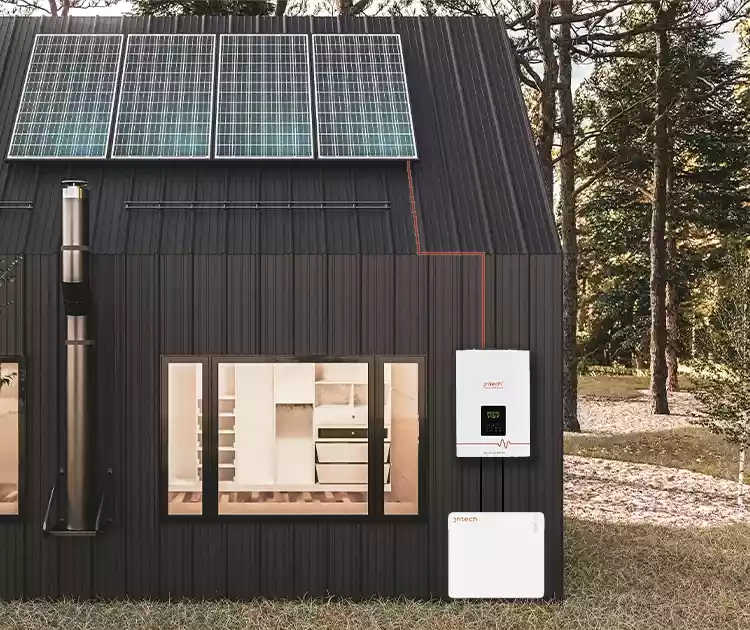
For residential users: It provides peace of mind as a backup power source during power outages caused by storms.
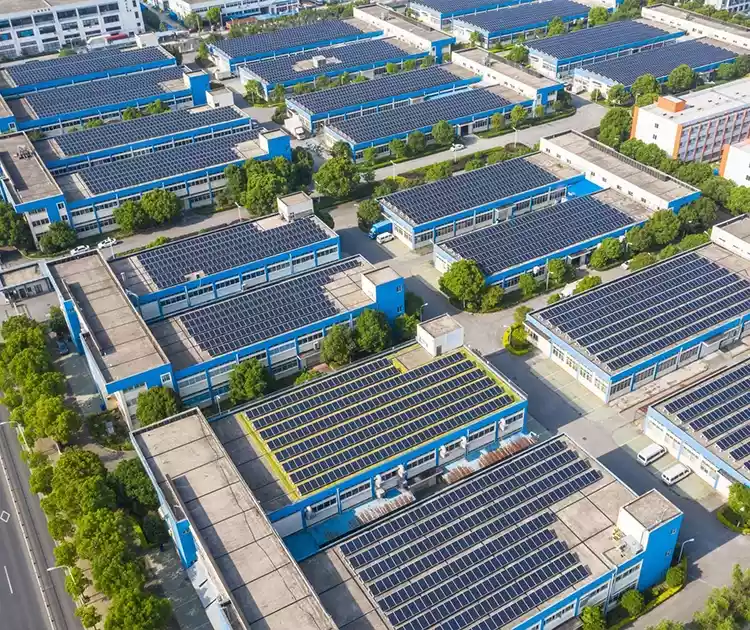
For commercial and industrial owners: It acts as a precise calculator for your ROI (Return on Investment).
For medical institutions: It is a life-saving power guarantee.
IV. Join the JNTech Global Partner Program
Facing the solar energy boom in Africa and the global energy transition, JNTech is recruiting global distributors and agents. We offer not only high-tech products with over 100 patents, but also the support of a global team of technical experts.
Investing in solar energy is investing in certainty for the next 25 even more years. Energy storage systems are not fast-moving consumer goods, and energy independence should not be a gamble. Every successful power generation is backed by rigorous electrical logic and continuous technical support. Choose JNTech, and choose reliability that remains visible even in extreme environments.
Web: www.jntechenergy.com 丨 WhatsApp: +86 18019566616 丨 Email: info@jnnewenergy.com